Resurface or Regrade? A Diagnostic Checklist Before You Pay for the Wrong Fix
June 25, 2026
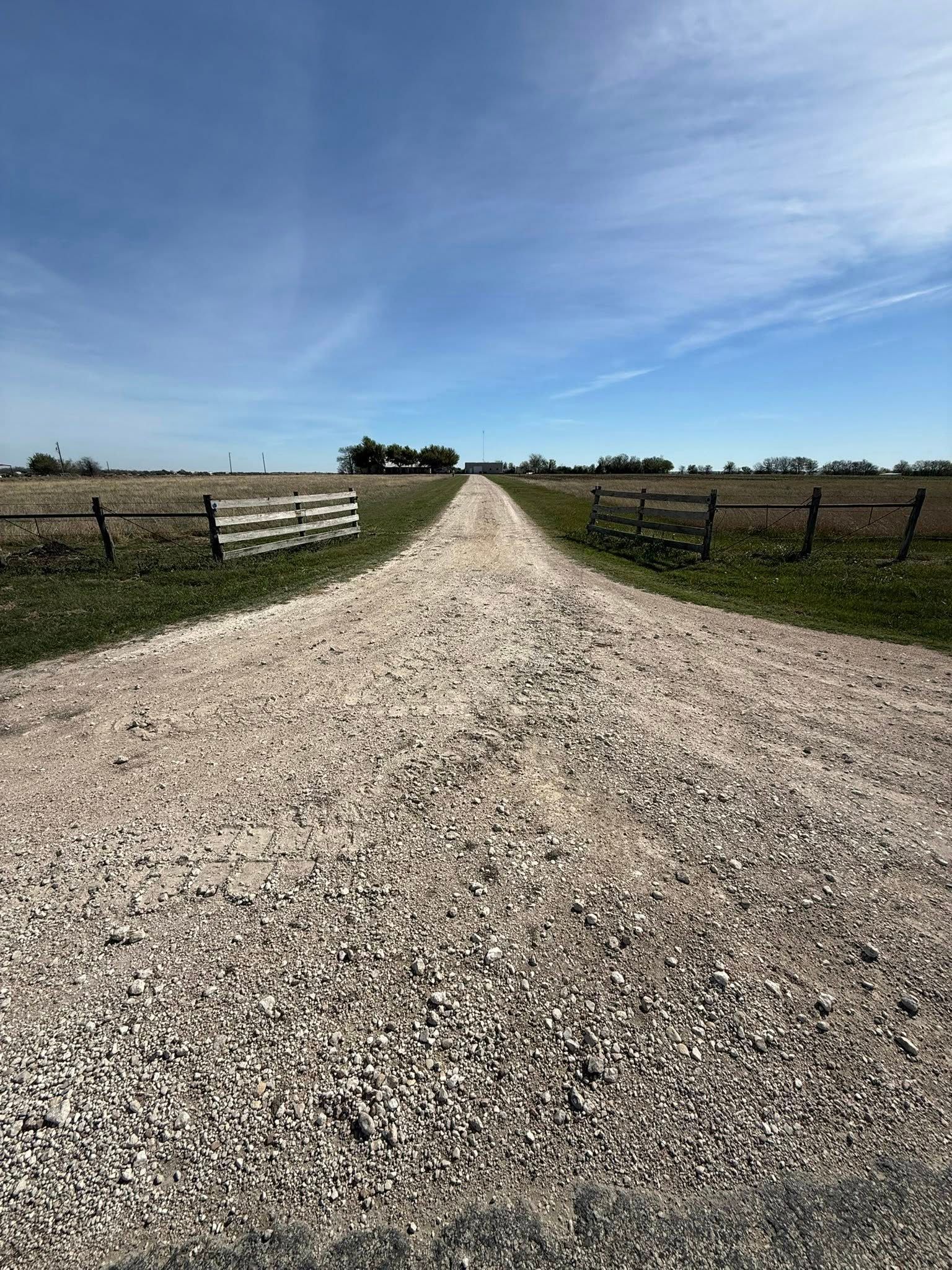
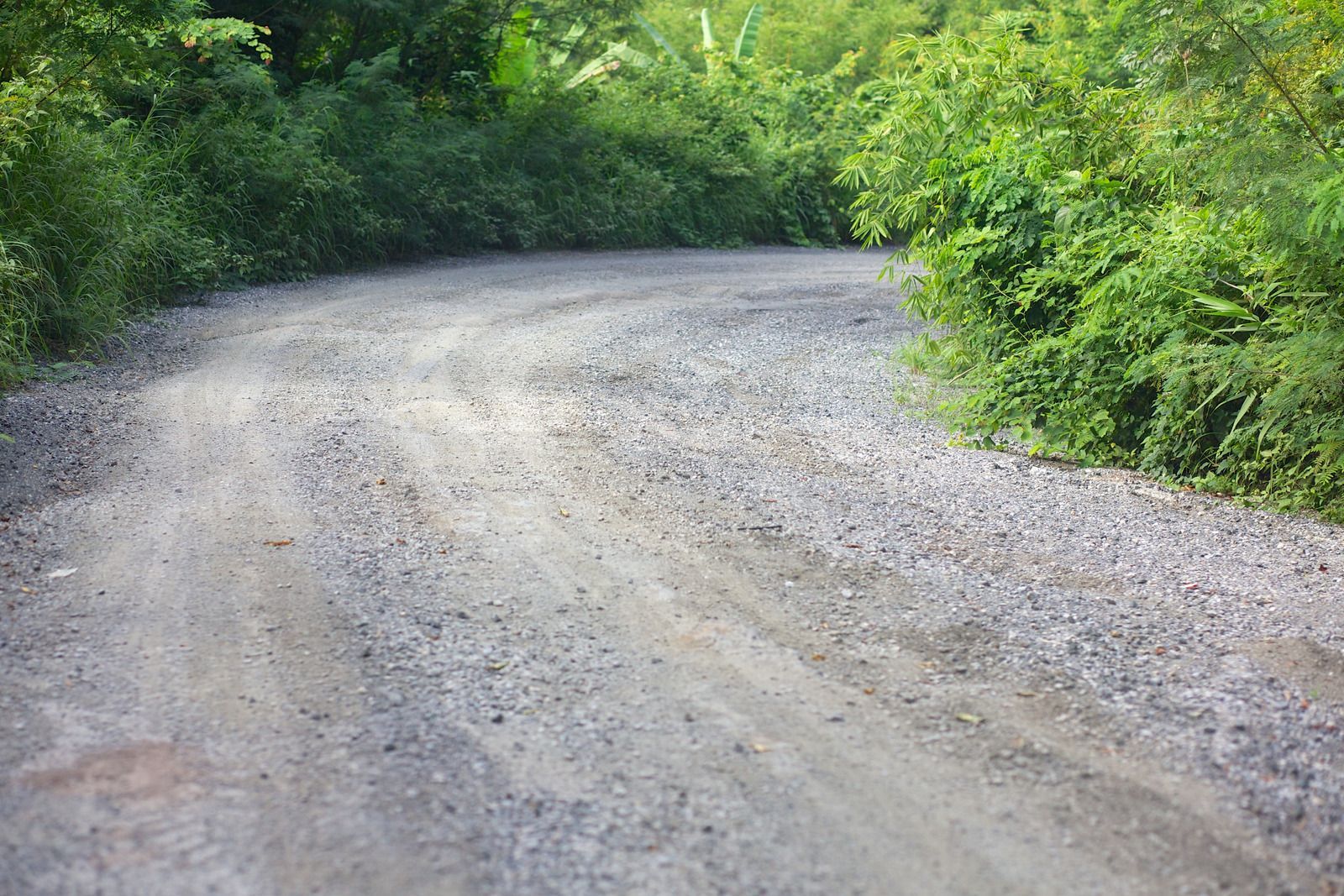
You back out of the garage after a week of rain and your tires drop into the same soft rut they found last spring. The fresh load of gravel you paid for is gone, washed into the ditch, and a brown puddle is sitting where your driveway meets the road. You are already wondering if you need another truckload.
Here is what most people never hear before they spend the money. A driveway that fails in the same spot, season after season, rarely has a surface problem. It has a slope problem. Resurfacing puts a fresh layer over the top. Regrading reshapes the ground underneath so water runs off instead of pooling and soaking in. Pour a new surface over a bad slope and you pay to watch the same failure return. Fix the slope first, and a far cheaper surface fix can hold for years.
Start Here: Is It the Surface or the Slope?
Run these checks before you call anyone. They take one rainy afternoon.
- Watch your driveway during a hard rain. Note where water flows, where it stands, and how long puddles linger after the sky clears.
- Look for a crown. A healthy driveway sits slightly higher down the center so water sheds to both edges. Sight down its length; if the middle is flat or dished, water has nowhere to go.
- Find out if the damage repeats. Ruts, potholes, and washouts that return in the same place point to grade. A single worn patch in a solid surface points to resurfacing.
- Press on the soft spots. If the wet ground feels spongy or pumps water when you step, the base is saturated and the fix is drainage and grade, not a topcoat.
- Check which way water moves near the house, shed, or garage. It should always travel away from structures.
TIP: Mark every puddle with a stake the next time it rains, then come back two hours later. Whatever is still holding water is your low point, and that low point is what any honest fix has to correct first.
WARNING: If water is running toward your foundation, or if a washed out edge has left soil hanging over a hollow, stop using that part of the driveway. Saturated, undermined edges can collapse under the weight of a vehicle, and water pushed against a slab causes movement you cannot see until cracks appear inside.
What Is Actually Going Wrong Under Your Driveway
Most failing driveways trace back to one root cause: water is not leaving fast enough. Everything else is a symptom of that.
The most common cause is lost slope. Over time, traffic flattens the crown and fills the side channels that once carried runoff. Once the surface goes flat, water stops draining and starts soaking into the base. A saturated base loses its strength, tires push it sideways, and you get ruts and potholes that keep coming back.
Secondary causes get misread all the time. A thin or worn surface looks like the whole problem when the base beneath it is still sound, and that is the one case where resurfacing alone is right. Base failure is the opposite. When the rock layer has pumped out or mixed into the soil, no new surface will hold, because there is nothing firm to carry the load.
Around here the clay does its own damage. This region sits on Houston Black clay, which runs sixty to eighty percent clay and shrinks hard in a dry spell, then swells when the rain returns. That movement opens cracks, lifts low humps, and breaks the bond a surface needs.
How We Diagnose It in the Field
On service calls we start with water, not the surface, because water tells the truth about grade. We walk the driveway with a level and a long straightedge to read the crown and cross slope. A driveway that no longer sheds to its edges is the most common finding we record.
Next we test the base, probing the soft areas to see whether firm rock still sits under the surface or has worked down into the clay. When a probe sinks easily or the ground pumps water, a topcoat would be wasted, because there is nothing solid to hold it. We trace where runoff enters and leaves and check the side channels and any culvert. After inspecting hundreds of these, the pattern holds: the driveways that keep failing are the ones where water was never given a clear path off the surface.
Your Repair Options
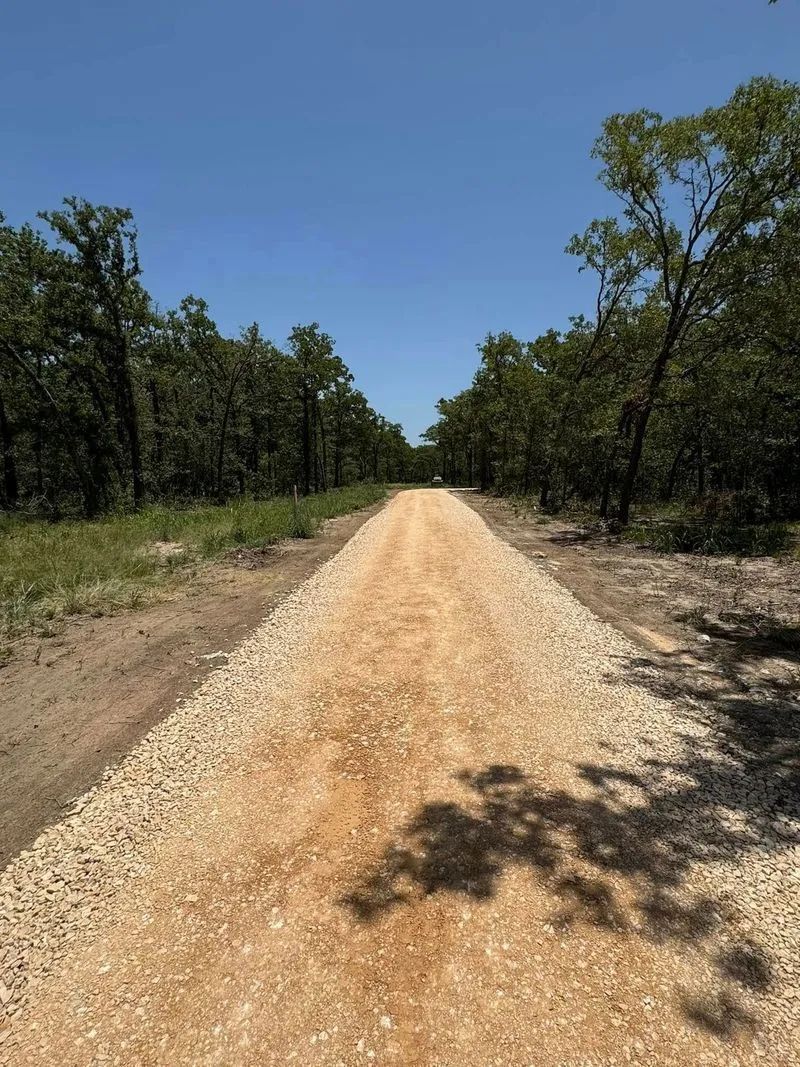
A fresh wearing layer is the simplest fix. For a gravel driveway that has only thinned out, adding and compacting new material restores the surface, and you can handle a small stretch with a rake and a tamper. This works only when the base is firm and the slope still sheds water. Skip the grade check and the new rock disappears as fast as the last load.
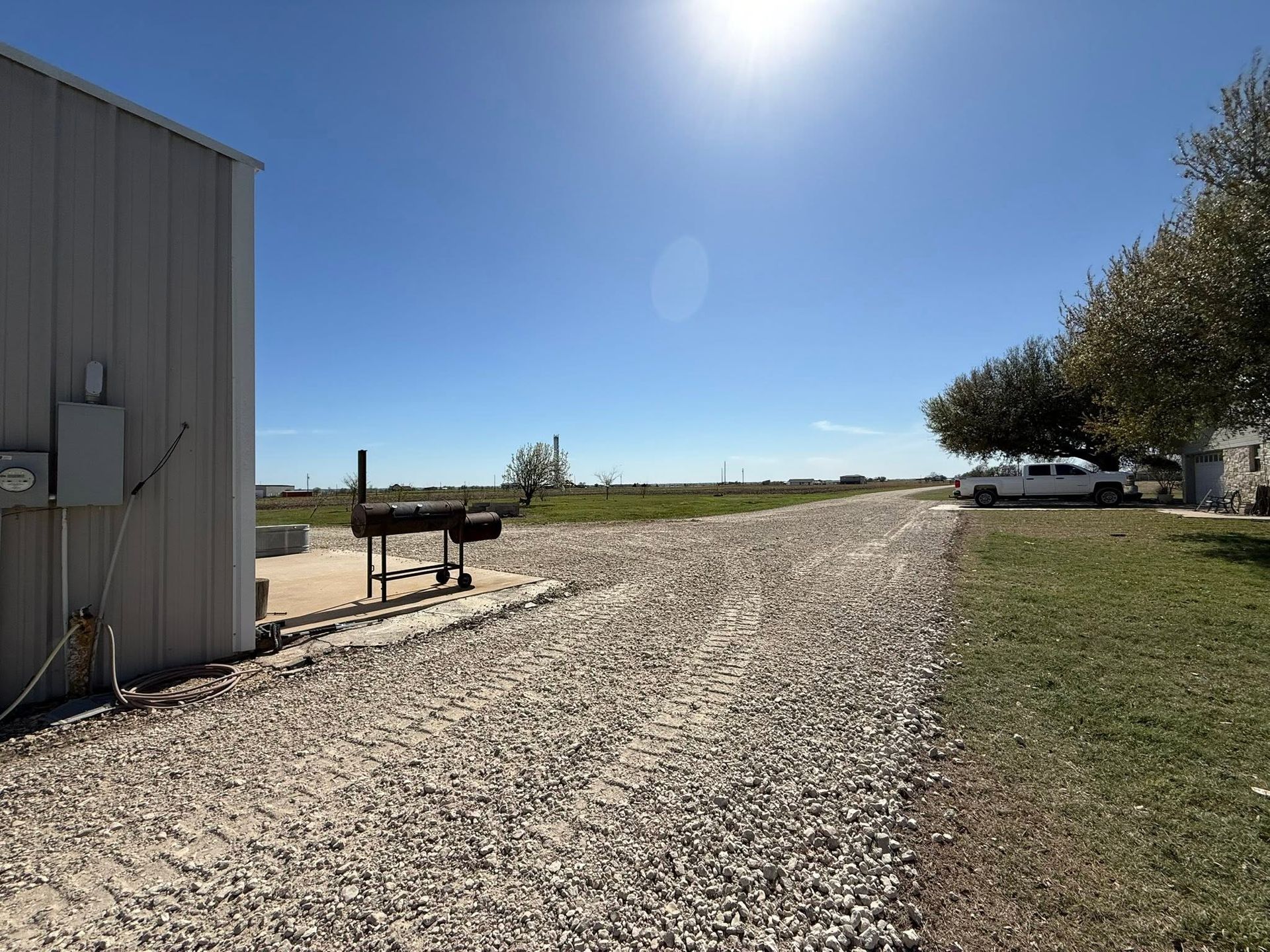
Recrowning and regrading reshape the surface and base so water runs off. We use a box blade or grader to rebuild the center high point, cut clean side channels, and recompact the base. This is equipment work, not a weekend job, and it is the right call whenever damage keeps returning to the same place. A base rebuild goes further, replacing failed material with fresh rock compacted in layers. Pairing any of these with a drainage swale gives runoff somewhere to go, which is what makes the fix last on slow draining clay.
Resurface or Regrade: How to Choose
| Factor | Resurface | Regrade |
|---|---|---|
| Scope | New layer on a sound base | Reshape slope and base |
| Best when | Surface worn, water still sheds | Water pools or damage repeats |
| Longevity | Short if grade is wrong | Years when paired with drainage |
| Risk | Hides a failing base | Minimal when done correctly |
| Return on effort | High only over solid ground | High when water is the problem |
Age, severity, and the soil under you should decide it. A young driveway with a firm base and one worn patch is a resurface. A driveway that floods, ruts, or fails in the same spot is telling you the grade is gone, and a surface fix will only mask it. Honest answer: sometimes a topcoat holds for years, and sometimes it covers a base that is already washing out. The tell is whether water leaves on its own. If it does, resurface. If it stands, regrade first.
Why Driveways in This Part of Texas Behave Differently
The black clay across Central Texas changes the whole equation. It drains so slowly that a flat driveway here stays wet long after one on sandy ground would dry, and that standing water soaks the base and softens it from below. Then the clay swells, shrinks in the next dry stretch, and moves the ground under your surface a little more each cycle. A driveway that would last a decade on free draining soil can fail in a couple of wet and dry seasons here if the slope is not built to push water off fast. On this ground, getting runoff moving is the entire job.
Keeping a Fixed Driveway Fixed
After the first heavy rain of each season, walk your driveway and mark new low spots before they deepen. A few times a year, clear the side channels and any culvert so runoff keeps its path, and sight down the crown to top any stretch that has gone flat. After a long dry spell breaks, watch for fresh cracks or humps, since that is when the clay moves most. Catching a flattening crown early is the difference between a quick touch up and another full regrade.
Frequently Asked Questions
Will resurfacing fix my recurring potholes?
Only if the base is firm and water already drains off. Recurring potholes in the same spot mean the slope is gone, so a new surface will fail again until you regrade and restore drainage first.
How do I know if my driveway base has failed?
Walk the wet areas and press down. If the ground feels spongy or pumps water when you step, the base is saturated and broken. A firm, solid base does not move underfoot.
Why does water pool on my driveway after rain?
The crown has flattened or a low spot has formed, so water has nowhere to shed. On slow draining clay it then sits for hours, soaks the base, and softens the ground under your surface.
Is regrading something I can do myself?
Reshaping the crown and base needs a box blade or grader and proper compaction, so it is not a hand tool job. Adding gravel to a sound driveway is doable yourself, but correcting slope is not.
How often should a gravel driveway be regraded?
On this clay, plan to recrown every two to four years depending on traffic and rainfall. Clearing side channels and topping flat spots between regrades stretches that interval considerably.
Trusted Earthwork Solutions For Stronger Driveway Foundations
Before any work begins, ask one thing: does water leave this driveway on its own, or does it sit? That answer separates a surface fix from a grade fix, and it is the difference between paying once and paying twice. The slow draining black clay around Thorndale punishes a bad slope faster than most soils, which is exactly why the diagnosis has to come before the dirt work.
With 8
years of experience working on driveways, grading, and site preparation, Huber Earthworks
provides straightforward assessments based on what your property actually needs. When you want a straight read on which fix yours actually needs, Huber Earthworks grades and builds
driveways across Thorndale, Texas. We will tell you honestly whether you need a fresh surface or a corrected slope, so you pay for the fix that lasts.